Before we start with the cases it is very important to look at why it was so easy for these criminals to get away with the Sale or Return theft.
We had been telling the various authorities exactly how this scam worked, for many years, but due to both an unwillingness to understand the law and even, in this case, outright corruption, the criminals were able to get away with it time and time again. All the criminals had to claim was “Civil Dispute” and the victims lost everything.
The “civil dispute” loophole was the ultimate legal shield for organized automotive fraudsters in 1990s Britain. It allowed rogue operators to steal multi-million-pound fleets of luxury cars in broad daylight while using the police as an unwitting private security force to keep the furious victims away.
The loophole thrived on a perfect storm of outdated criminal laws, rigid police boundaries, and clever exploitation of contract law.
1. The Anatomy of the Loophole: Consent vs. Theft
Under the Theft Act 1968, criminal theft requires proving that someone dishonestly appropriated property belonging to another with the intention of permanently depriving the owner of it.
Rogue dealerships bypass this definition entirely through Sale or Return (SOR) contracts:
- The Handover: The victim willingly handed over the keys, the vehicle, and the V5 registration logbook.
- The Legal Illusion: The moment the owner signed an agreement authorizing the dealer to sell the car, they legally transferred custody and the authorization of title.
- The “Breach”: When the dealer sold the car, pocketed the cash, and refused to pay the original owner, the law did not immediately see it as “theft”. Instead, it was viewed as a breach of a commercial contract – a purely civil matter.
2. How Criminal Dealers Weaponised the Police
Because police forces are strictly trained not to intervene in civil contract disputes, fraudsters turned this boundary into an offensive weapon.
When a victim realized they had been scammed and went to the garage forecourt to take their car back, a calculated sequence took place:
- The Dealer Calls 999: The rogue dealer would call the police, reporting a “civil dispute turning violent” or a “trespasser causing a disturbance.”
- The Rigid Police Response: Arriving police officers would look at the paperwork. They saw a signed contract and a dispute over money.
- Protecting the Fraudster: Because the garage was a business premises and the car’s custody was disputed, the police routinely sided with keeping the peace.
- The Ultimatums: Rightful owners trying to drive their own property away were regularly told by officers to “step away and take it to the county courts, or face arrest for a Breach of the Peace or Public Order offences.”
For criminals, this was a golden ticket. They used the state’s own police force to hold off the victims while they cleared out the forecourt and transferred the assets to shell companies.
3. Why the Loophole Remained Open So Long
Several institutional factors allowed this racket to dominate the 1990s consumer landscape:
- The V5 Logbook Misconception: Private individuals mistakenly believed the V5 document was absolute proof of ownership. Legally, it only dictates the registered keeper. Criminals manipulated this confusion to fast-track sales to innocent third-party buyers before the original owner even realized they had been defrauded.
- The Civil Court Safety Valve: Police forces used the civil courts as an excuse to clear their workloads. Victims were told to sue the dealer. However, by the time a victim paid for a civil solicitor, the rogue dealer had already dissolved the company, declared bankruptcy, and reopened down the road under a different name.
- Lack of Specialized Fraud Training: In the early 90s, frontline police officers lacked specialized training in corporate or contract fraud. They relied on a simplistic binary: if you handed over the keys voluntarily, it couldn’t be a criminal theft.
4. The Fall of the Loophole
The rampant nature of these scams—combined with intense exposure from investigative journalists who captured police officers threatening victims on hidden cameras—forced a fundamental shift.
The loophole was systematically closed through several avenues:
- The Rise of “Fraudulent Trading”: Prosecutors began bypassing basic theft charges. Instead, they used Section 458 of the Companies Act 1985 (and later the Fraud Act), proving that the entire business model was intentionally designed to defraud creditors and customers.
- The “Vitiated Consent” Precedent: Case law evolved to establish that if consent to hand over a vehicle was obtained purely through an initial deception (the dealer never had any intention of fulfilling the contract), the consent was entirely void, rendering the act criminal from the outset.
- Trading Standards Stings: Local Trading Standards departments began partnering with police forces to launch unified crackdowns, ensuring that when an SOR fraud was reported, it was flagged as an organized criminal syndicate rather than an isolated “bad business deal”.
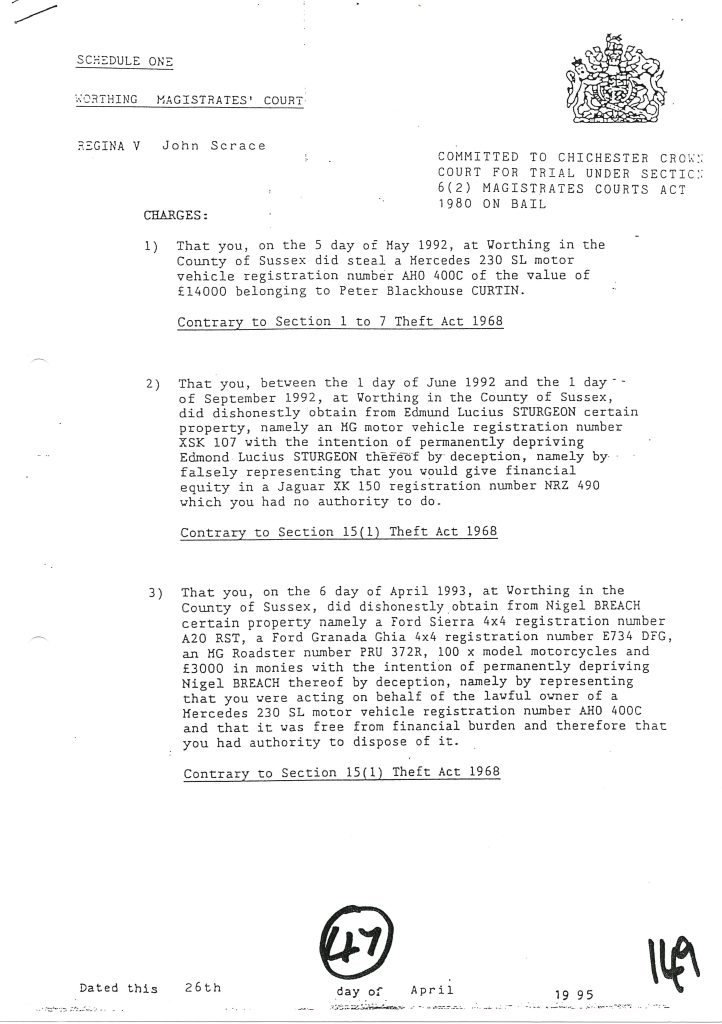
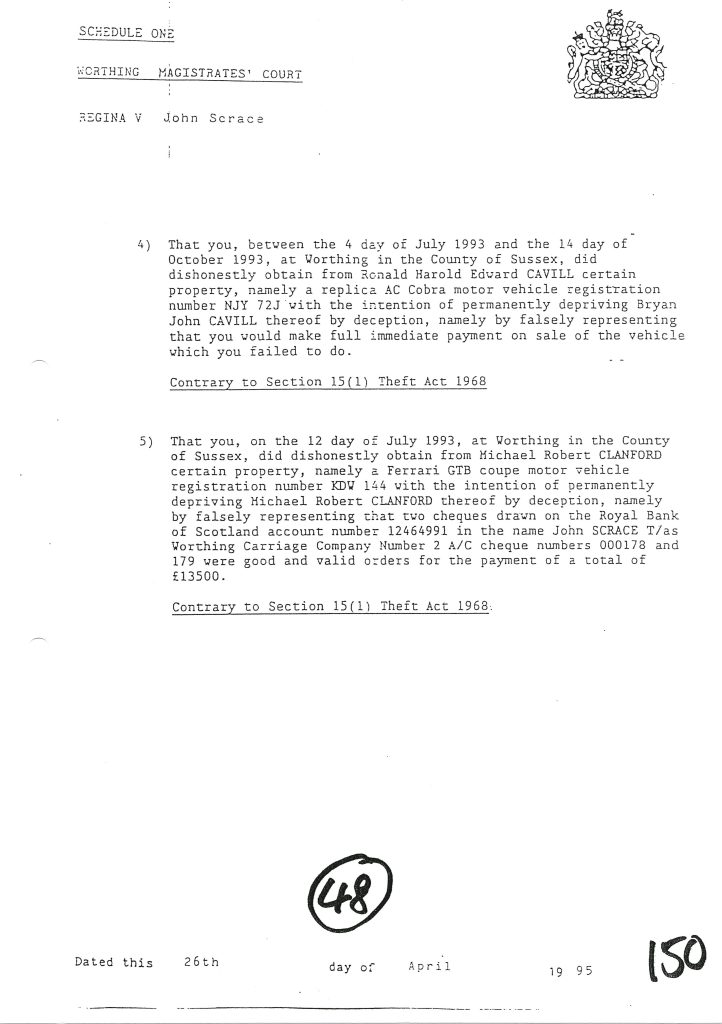
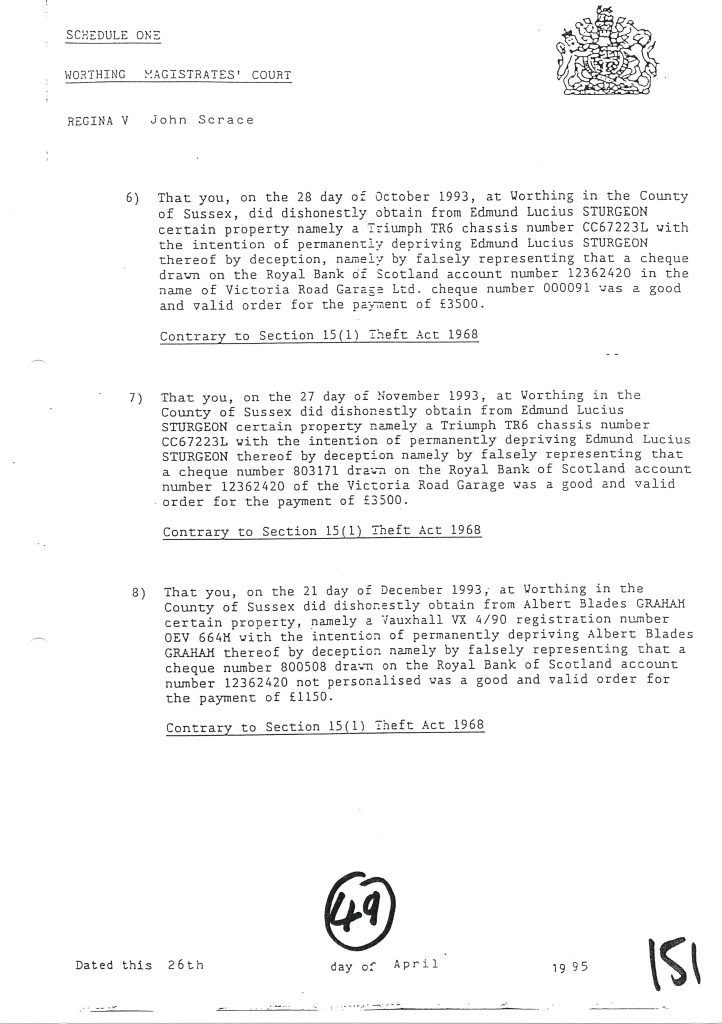
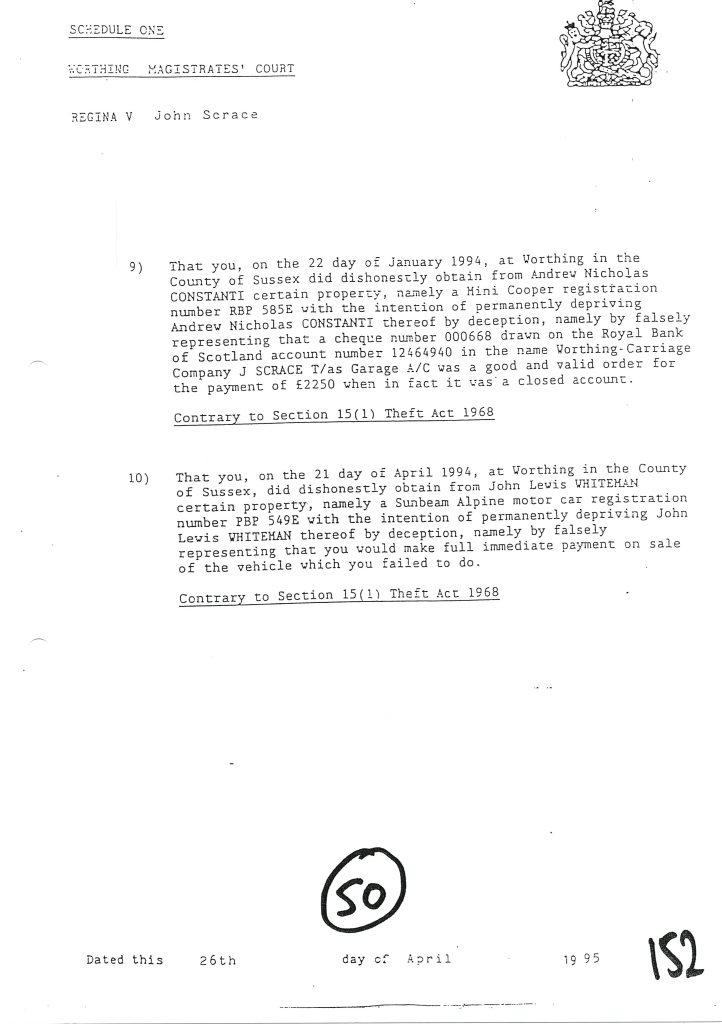
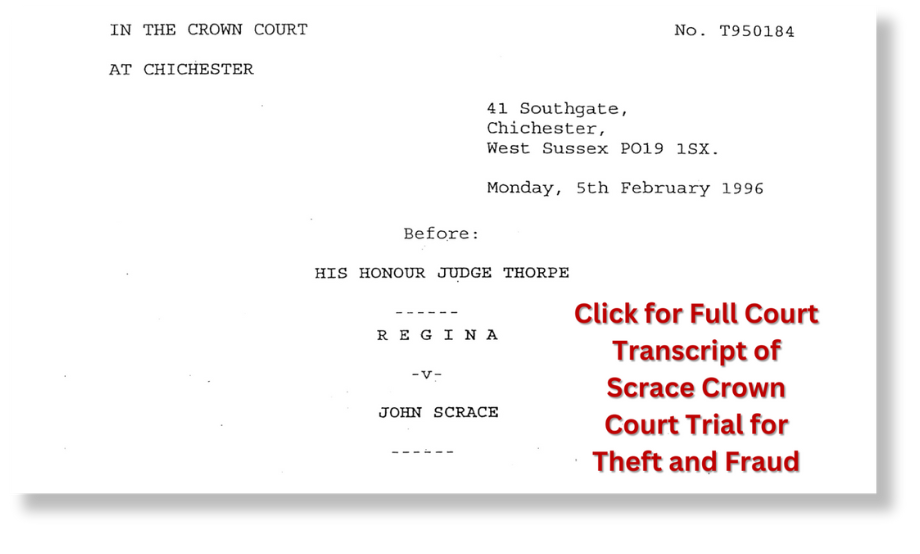
Thus we have the situation where, finally, John Scrace appeared in Worthing Magistrates Court charged under the Theft Act 1968